

Installation with six 19th-century iron columns, stones, iron sculptures, seven baobab trees, and medicinal and aromatic plants
The installation pays tribute to the enslaved Africans who worked on the sugarcane plantations and highlights the presence of their cultures in the making of Brazil. The six 19th-century English iron columns evoke Ogum, the orixá of iron and tools, as well as the industrial memory of the sugar economy. On top of them, stones found on the property, together with the baobabs, evoke the strength and justice of Xangô. Symbols and objects of Exu, Ogum, Oxóssi, Ossain, and Oxumaré complete the ensemble, alongside medicinal and aromatic plants. Used in Candomblé rituals, these elements allude to nature and spirituality, giving new meaning to the remains of the old mill, now linked to ancestry and to African cultural traditions.
Bené Fonteles
Bragança, Pará, Brazil, 1953
Lives and works in the interior of Minas Gerais, Brazil
At Usina de Arte: Tempo Templo (2018)
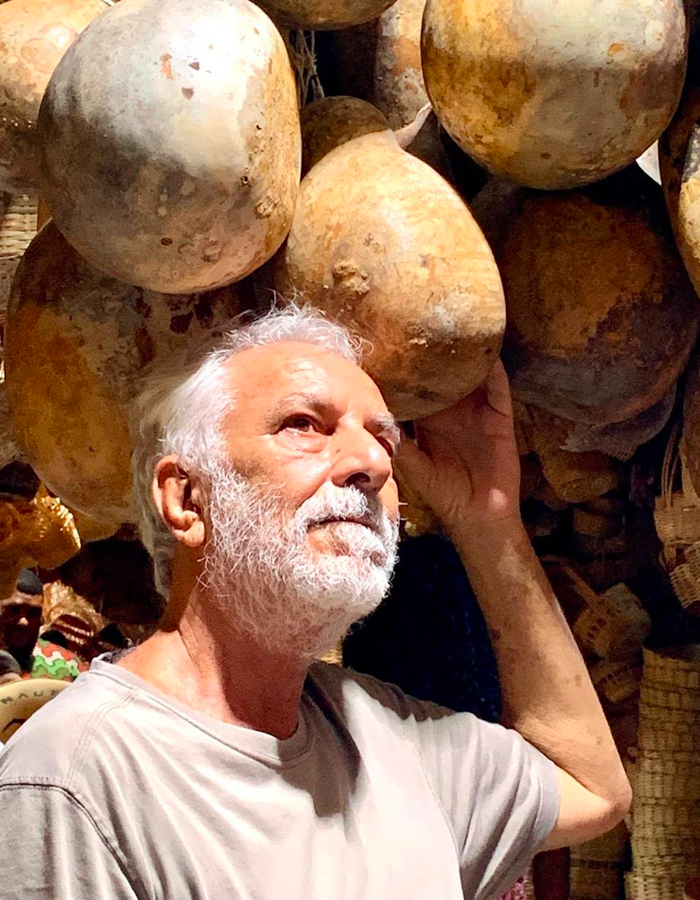
Artist, writer, curator, poet, shaman and composer from Pará, born in Bragança in 1953. Based in the interior of Minas Gerais, he has developed a body of work connected to mail art, experimentation and ecological awareness. He founded the Movimento Artístico pela Natureza (Artistic Movement for Nature) and researches art, spirituality, Indigenous cultures and ancestral knowledge.