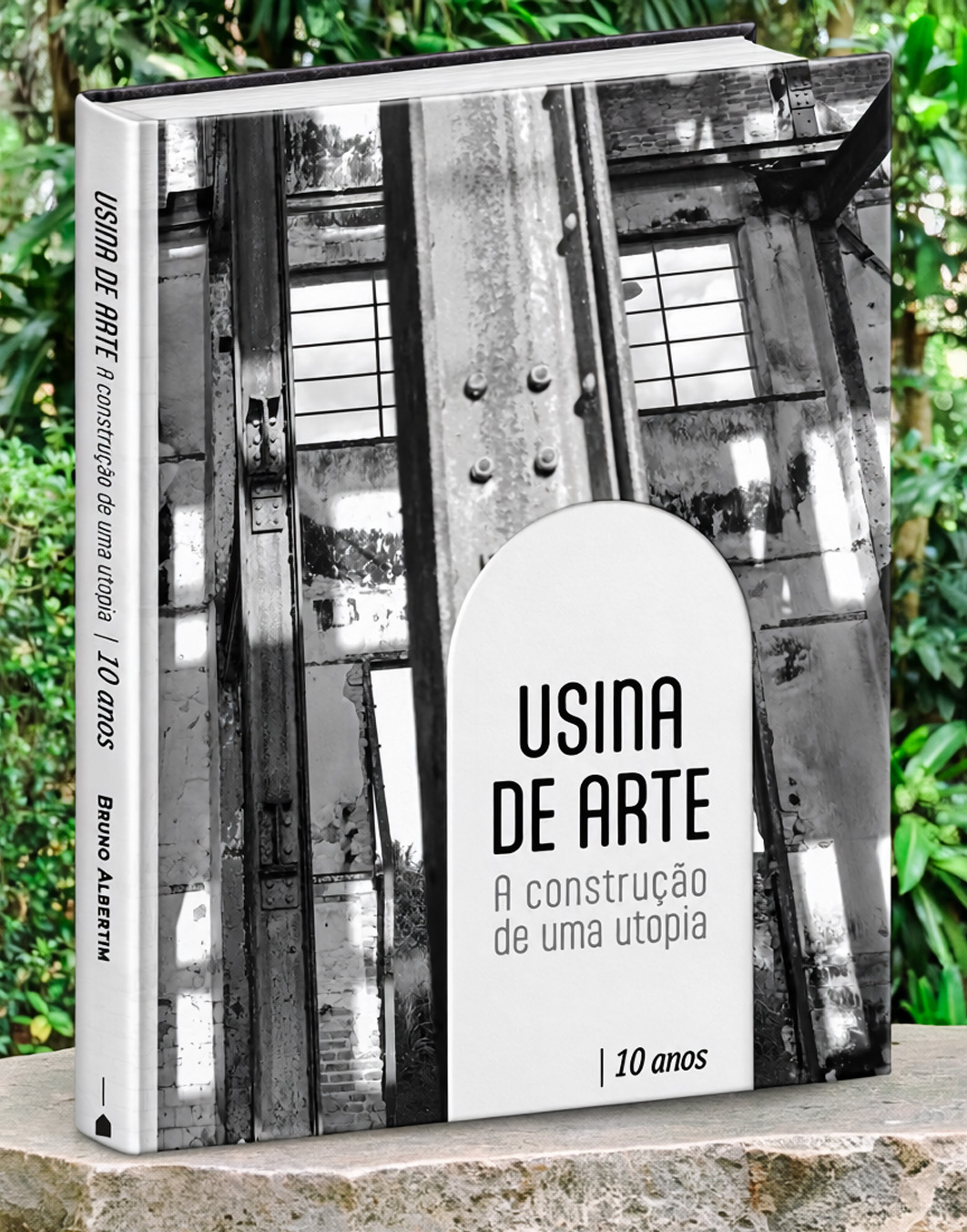
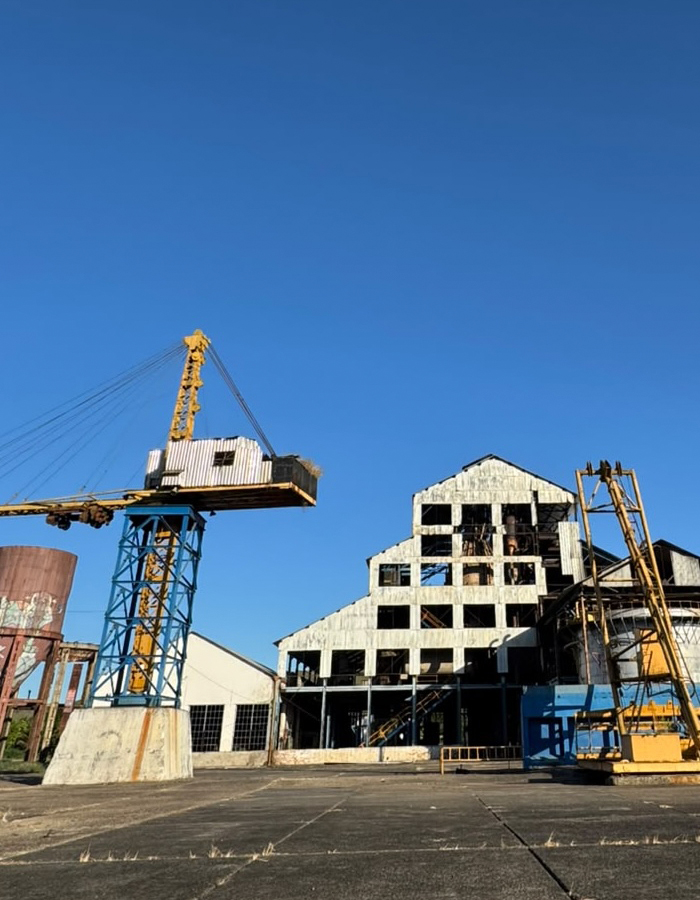
For decades, the Usina Santa Terezinha sugar mill ran on sugarcane. On the banks of the Jacuípe River, on the border between Pernambuco and Alagoas, it became Brazil's largest producer of sugar and ethanol in the 1950s. Around it grew a community, a village, a history.
In the late 1990s, however, the machines stopped. Like so many other mills in Pernambuco's Mata Sul region, Santa Terezinha stopped grinding. Silence took the place of motion, and an entire territory began to feel the effects of the decline of an economy that had shaped its landscape and its way of life.
But some stories do not end when the machines stop.
In 2012, Bruna and Ricardo Pessôa de Queiroz began returning to the place. There they found memory, affection, and beauty, but also a community that had lost its prospects and still dreamed of living through a time of prosperity once again.
Usina de Arte was born from listening to the people of this territory and from close exchanges with them, out of a shared desire to build new paths.
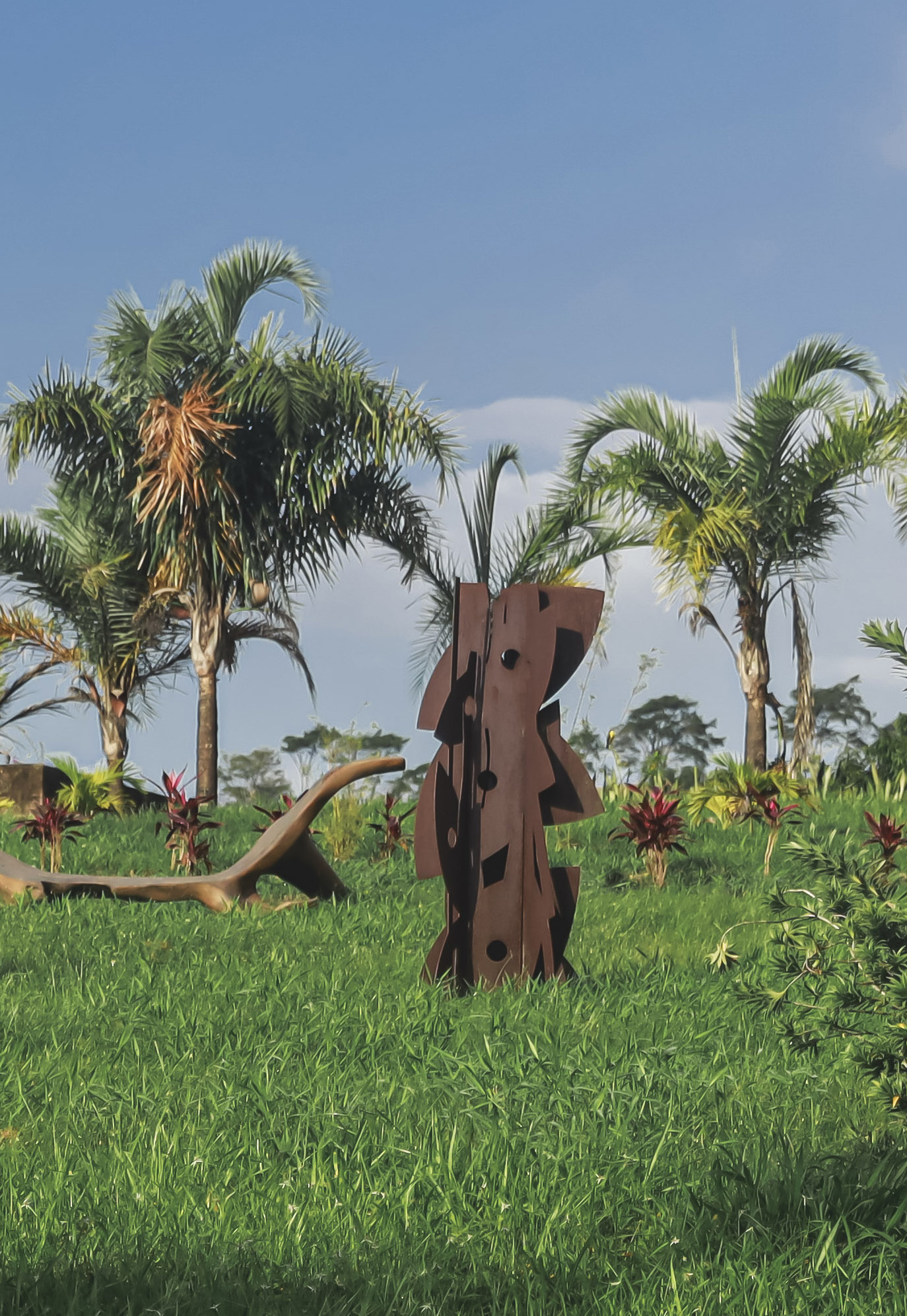
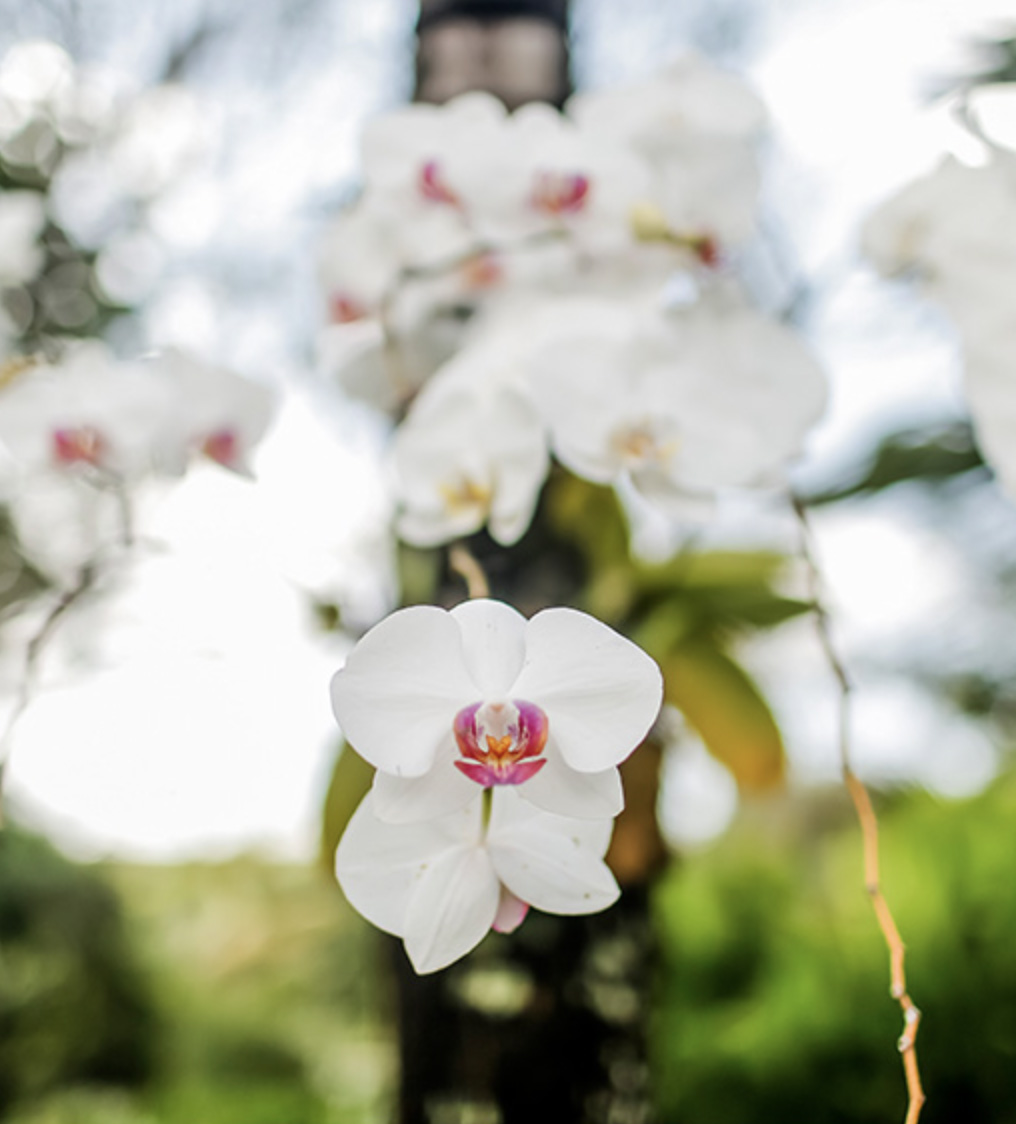
From 2016 on, the old mill began to take on a new life. Artworks came to inhabit the landscape, trees were planted, ponds were dug, and spaces for education were created. In the same landscape of sugarcane fields, another fuel emerged: contemporary art, combined with education, culture, and the environment, as a force for development, preservation, identity, and the future.
In the interior of Pernambuco, “to grind” became a verb once again. But this time, to transform other raw materials: memory into belonging, knowledge into opportunity, land into nature, and dreams into reality.
The Usina has a pulse again.
To generate futures.
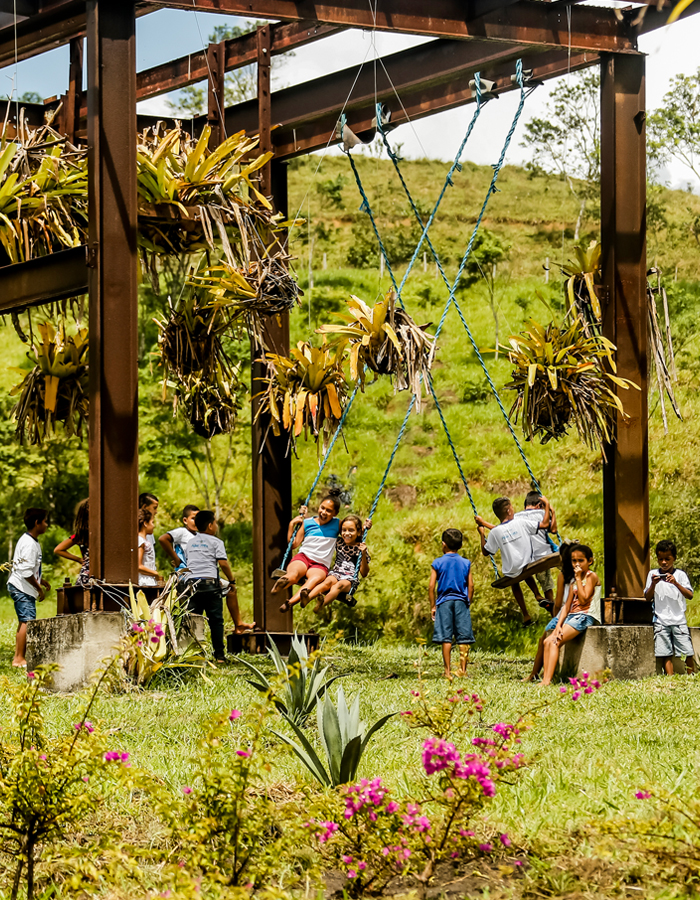
Usina de Arte is a collective project that brings together contemporary art, education, culture, and the environment to create new development opportunities in Pernambuco's Mata Sul region.
At its heart is the Art and Botanical Park, one of Brazil's largest open-air sculpture parks, where contemporary artworks coexist with a botanical garden in constant transformation and with the industrial plant of the former sugar mill. This combination of art, nature, and industrial heritage creates a unique, unexpected, and powerful experience.
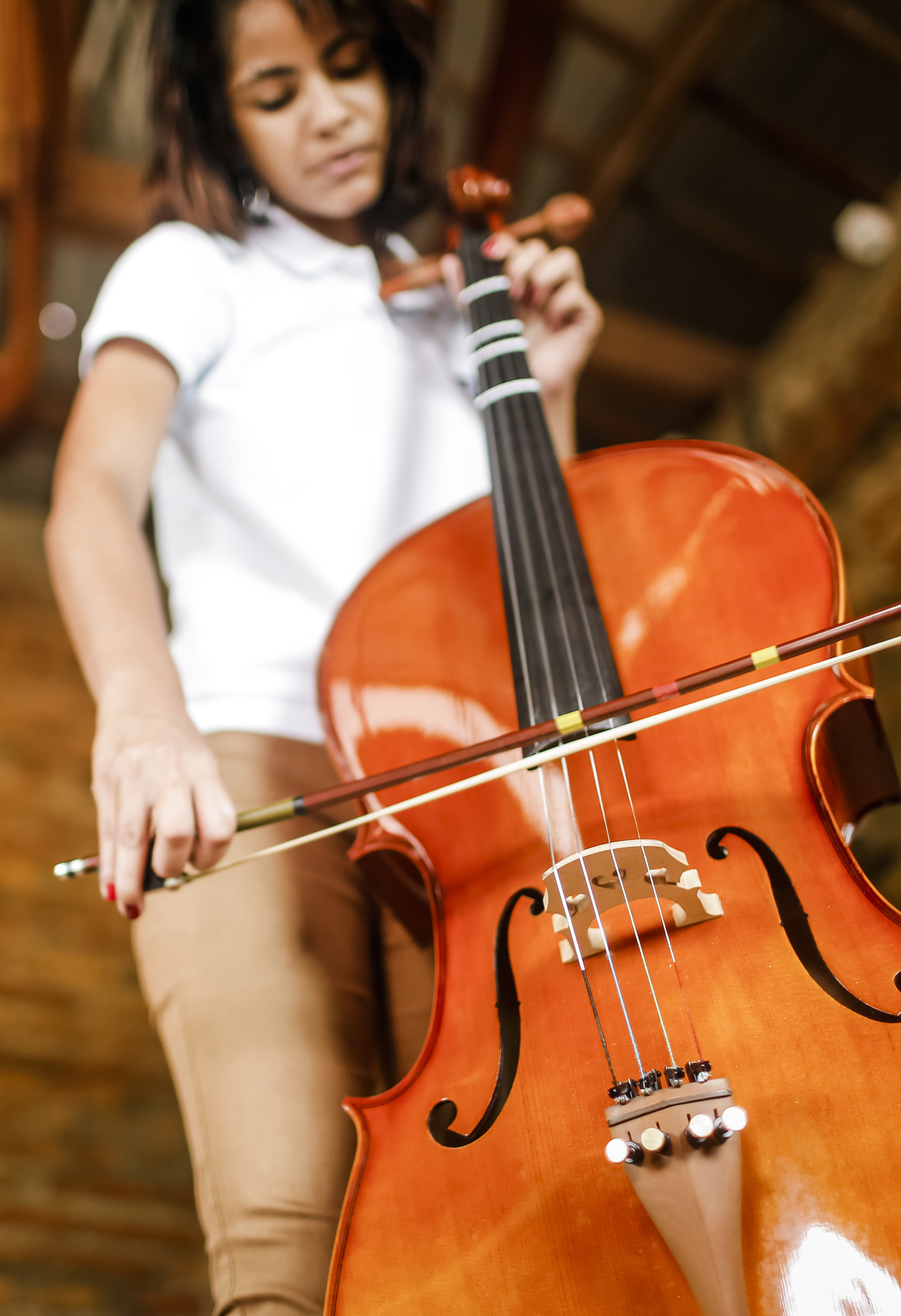
From this ensemble come initiatives that broaden access to culture, promote education, encourage creativity, and strengthen the bond between people and the territory.
Usina de Arte is managed by the Associação Socioambiental e Cultural Jacuípe, a nonprofit organization made up of more than 40 members from different segments of the local community.
More than preserving the memory of a place, the purpose is to build, collectively, new possibilities for those who live there.
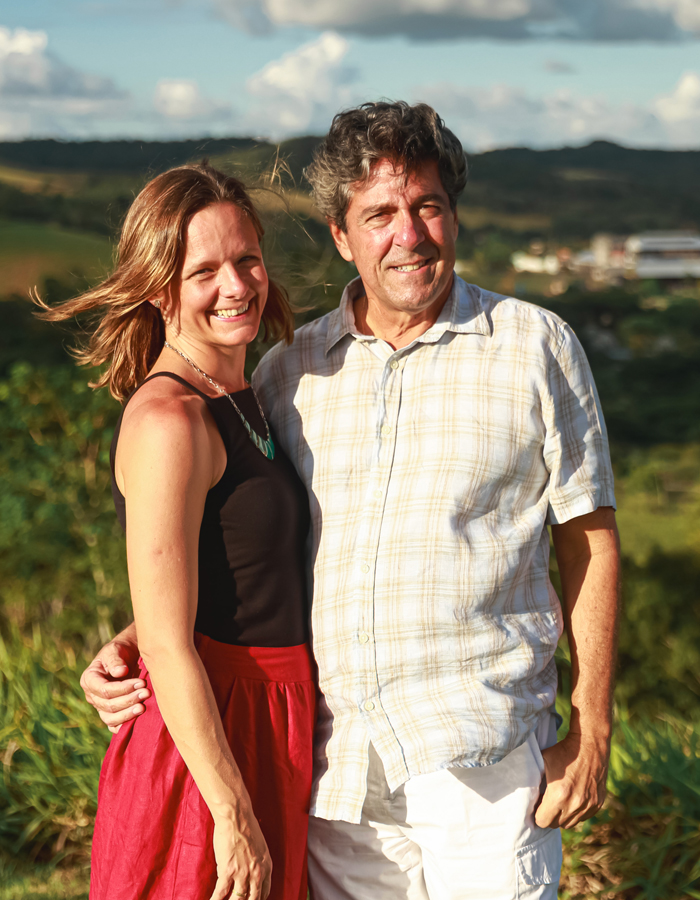
Usina de Arte was born from an encounter between memory, wonder, and the desire for transformation.
Bruna and Ricardo Pessôa de Queiroz are the project's founders. When he began returning to the old mill, Ricardo rediscovered a territory that was part of his history, of his childhood memories, and of the people he grew up with. For Bruna, it was a new place, striking and full of beauty. Reconnecting with the community, with old friends, and with so many stories still alive in that territory awakened in both of them the desire to imagine new paths for the Usina and for those who lived around it.
What began as a reunion with the past gradually became a life project. Art, nature, and education became ways to bring movement back to the territory and to create new possibilities for its community.
Bruna's professional path has moved between architecture and advertising, shaping a perspective that combines aesthetic sensibility, creativity, and management. At the helm of the Usina, she is devoted to building a project that brings together art, nature, education, and human development.
Ricardo brings business experience and a long record of philanthropic work in culture and health, as well as a deep family connection to the history of the old mill, built by his great-grandfather.
Together, for more than a decade, they have devoted time, energy, and resources to building an idea that is still in motion: transforming a territory of memory and affection into a living space where art, education, and nature can open new paths for its people and for the region.
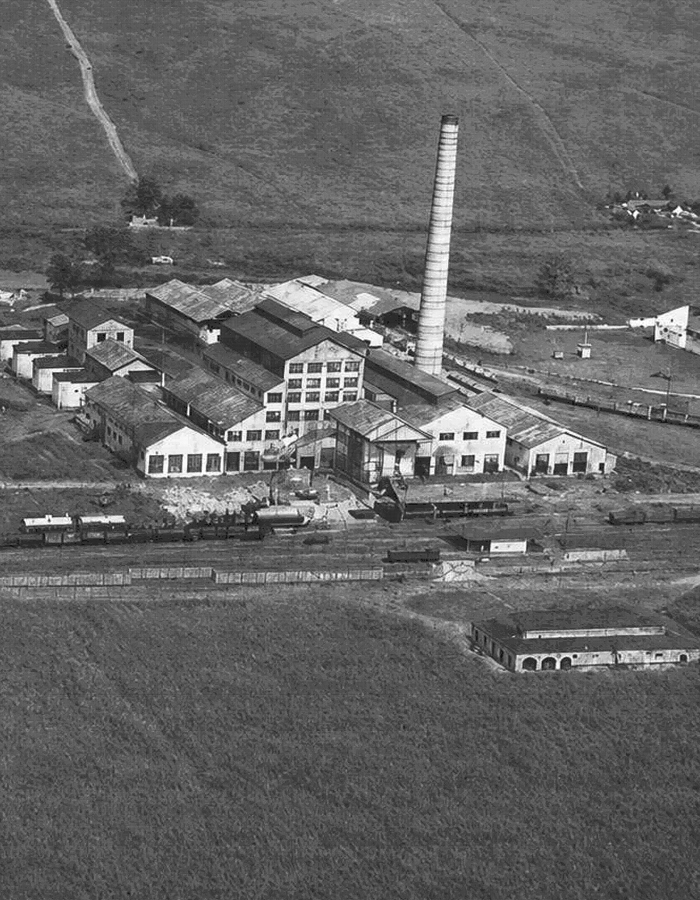
In 1926, José Pessôa de Queiroz (1881–1971) acquired the small São Luiz sugar plantation on the banks of the Jacuípe River, in Água Preta. Three years later, Usina Santa Terezinha began operating, and a village grew up around it, with a school, a church, a cinema, a market, a hospital, and houses for the workers. The mill kept pace with the most modern technology in the industry: its own railroad came to stretch for more than one hundred kilometers, served by 21 locomotives. In the 1950s, Santa Terezinha became Brazil's largest producer of sugar and ethanol.
This history, however, was also marked by ruptures. In 1982, a military intervention took over the mill's management and halted its production. A few years later, the Labor Court placed the company under a usufruct arrangement to settle its labor debts.
It was in this context that Ricardo Pessôa de Queiroz Filho, the founder's great-grandson, drew close to the Usina once again. At the labor auctions, he bought back the plantations he could, and by leasing the Industrial Park, he got the mill grinding again for four years, bringing in the last harvests in its history. When the renewal of the lease was denied, Ricardo stepped away from the territory.
In 2012, however, a new chapter began. At Bruna's urging, Ricardo started returning to the house built by his great-grandfather, where he had spent part of his childhood. Reconnecting with the territory, with old friends, and with the community awakened a new possibility: making the place prosper again, even though sugarcane was no longer the way forward.
During this period, the couple discovered the work of Hugo França, who came to the Usina in 2013 to work with the property's dead trees. Hugo returned in the years that followed, and these encounters began to transform the landscape. In 2015, José Rufino and Bárbara Maranhão joined the project and became key partners in its early days. With Fábio Delduque, creator of the Festival Arte Serrinha, the Festival Arte na Usina was also born.
In January 2016, Usina de Arte was established as an association. That same year, planting began, along with the installation of the first artworks, the result of an artist residency.
Since then, each harvest has added new works, new trees, and new paths to the land.
Where paths begin
Regenerating the landscape
Sowing new futures
Time to discover
Where paths begin
Regenerating the landscape
Sowing new futures
Time to discover