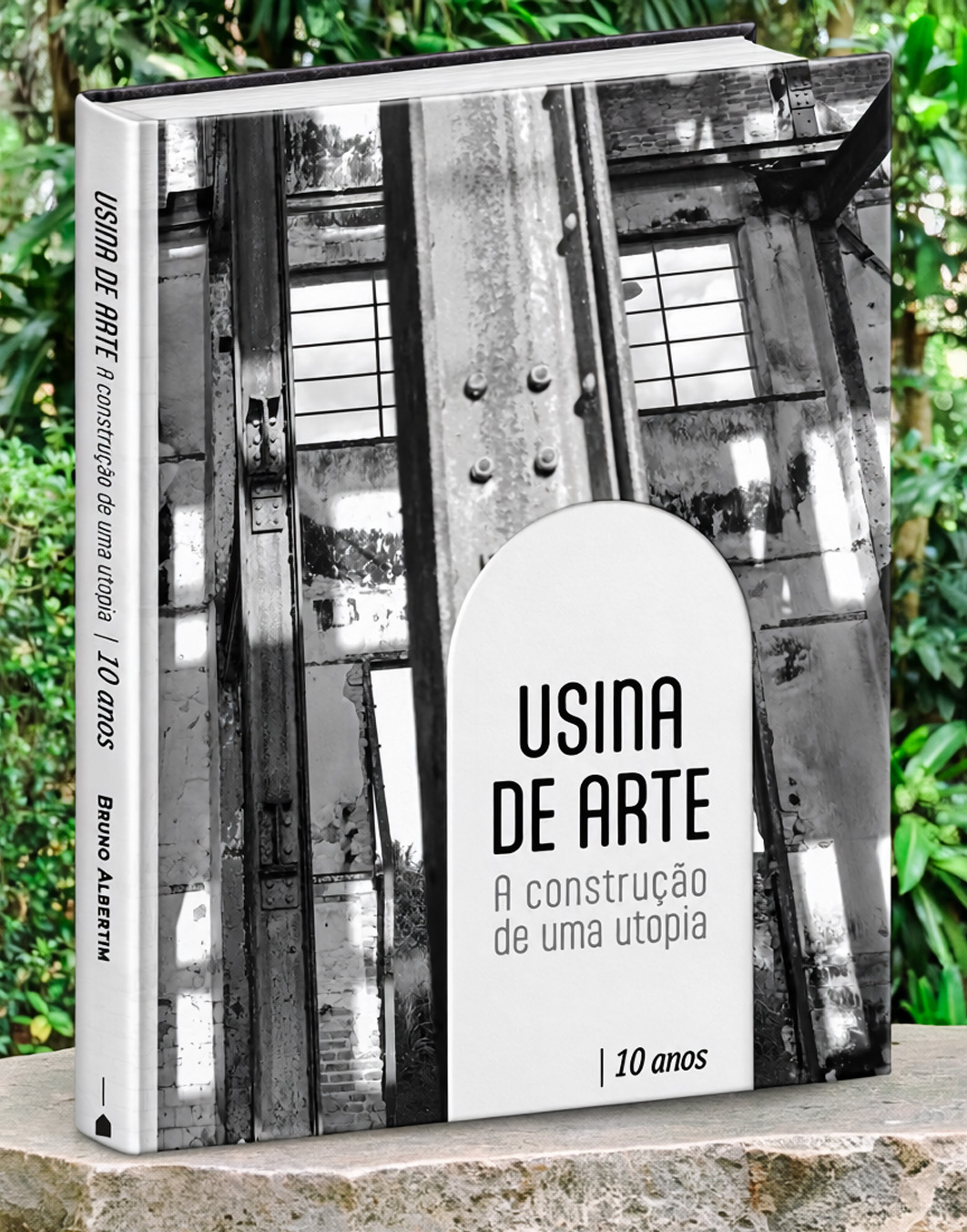
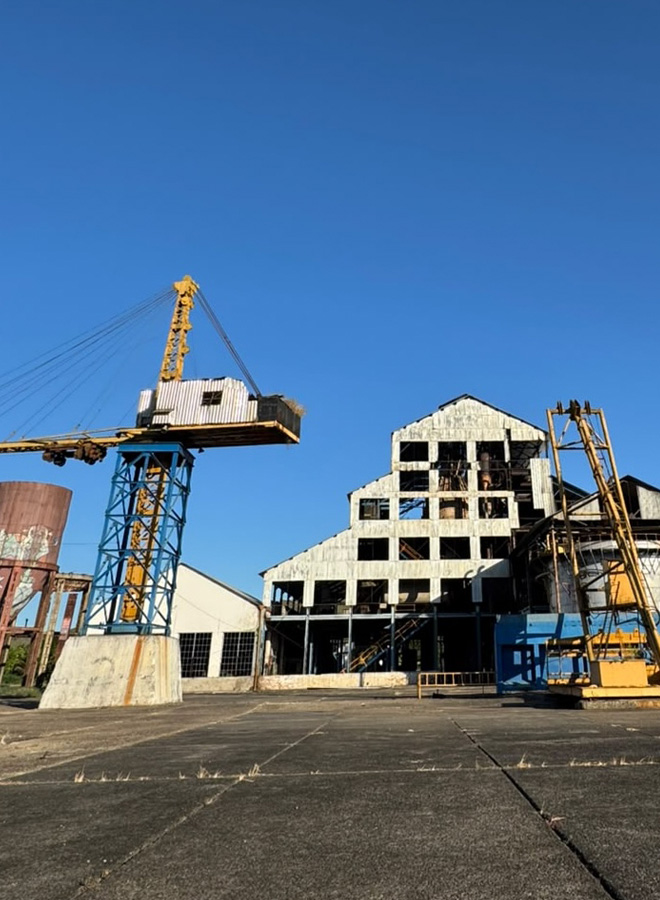
For a long time, sugarcane monoculture shaped the landscape of this region of Pernambuco. The former Usina Santa Terezinha was part of this setting, defined by industrial activity and the continuous cultivation of the land.
The transformation of this place also began with the garden.
The Artistic and Botanical Park was conceived by biologist and landscape designer Eduardo Gomes Gonçalves, who has guided its development and expansion from the start. In 2016, the planting of the first tree, a tamboril, marked the beginning of a process that continues to this day. From then on, new trees, shrubs, herbaceous plants, ground covers, and other species came to occupy the territory, creating an ever-changing landscape of different volumes, textures, shadows, colors, and flowering cycles.
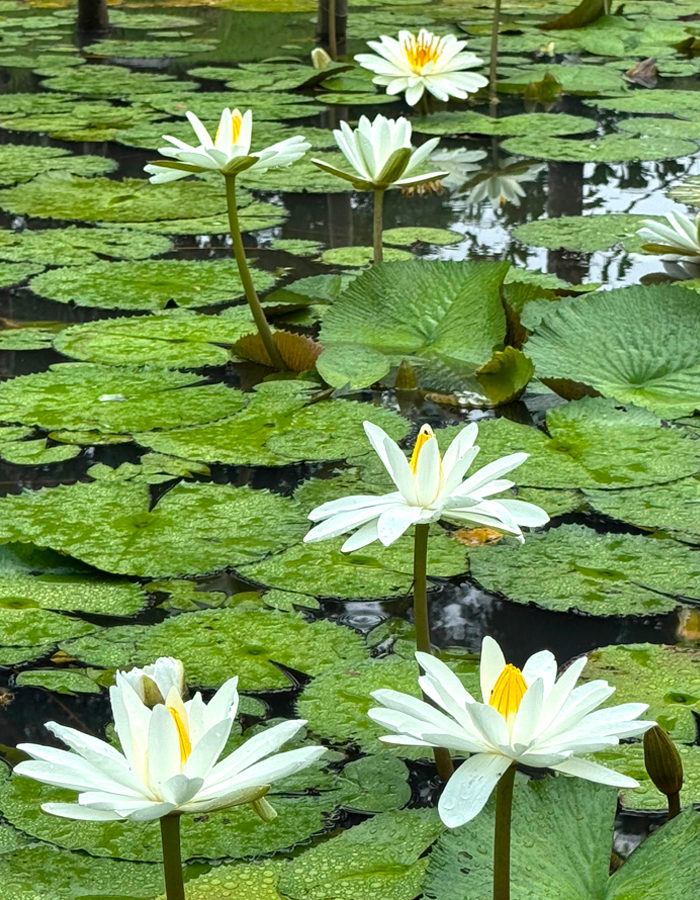
The creation of three ponds, fed by a nearby spring, extended this movement and created new environments for shelter and passage. As the vegetation grew and the waterways were restored, life also found room to return. Birds, reptiles, small mammals, and insects became part of the Park's daily life, gradually revealing the territory's capacity for regeneration.
Today, the Park covers more than 40 hectares (about 100 acres), in an ongoing effort of reforestation, management, and care that also extends to its surroundings. It is not a finished garden, but a landscape that keeps growing, changing, and reinventing itself. A process made of time, observation, knowledge, and permanence.
It is in this living environment that art happens.
Contemporary works do not arrive in a ready-made setting: they become part of a landscape in transformation. Trees grow around the sculptures, shadows shift throughout the day, plants bloom, and animals share the space with the works and the visitors. Over the years, each work forms new relationships with its surroundings. The garden is no longer a backdrop and becomes an active part of the experience.
At Usina de Arte, nature and art grow together, interweaving different kinds of time: the time of vegetation, the movement of animals, the transformation of the landscape, and the permanence of the works. Walking through the Park means crossing a landscape that, after decades shaped by monoculture, has found a new calling.
A landscape that does not seek to erase its history, but to transform it by preserving, restoring, and bringing vitality back to the territory.
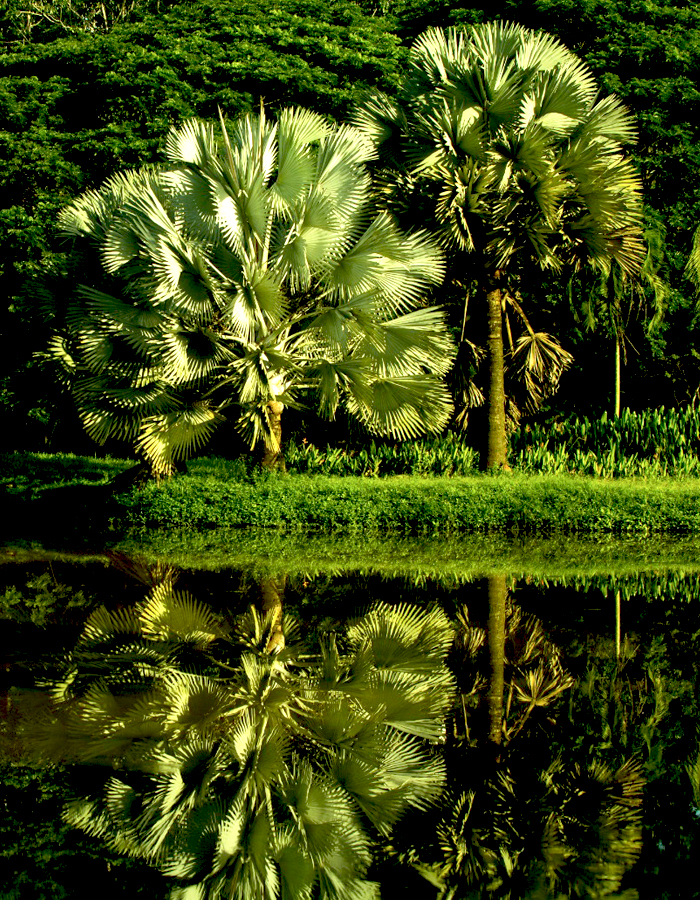
Even before the artworks, there were the palms.
When Ricardo and Bruna began spending time at the Usina again, they started arranging the gardens around the house. It was through this process that they met Gileno Machado, a scholar with a passion for palms. With him, they discovered the beauty and diversity of this plant family, an interest that deepened as the garden grew.
The palms arrived little by little, from different parts of Brazil and from tropical regions around the world. Over time, the collection grew and earned a place of its own in the Art and Botanical Park. Gileno was invited to be its curator, and the Palmetum was named in his honor.
Among the Brazilian species are the carnaúba, so closely tied to the landscape and culture of the Northeast, the buriti of the veredas, and the carandá of the Pantanal. From other tropical landscapes came the Bismarck palm from Madagascar, with its silvery foliage; the lipstick palm, with its bright red stems; Pritchardia, with its large fan-shaped leaves; and Arenga pinnata, known as the sugar palm. Its sap is traditionally used to produce sugar in parts of Southeast Asia.
Among the most remarkable is Tahina spectabilis, from Madagascar. Described by science in 2008, it is a critically endangered palm that flowers only once in its lifetime and dies afterward.
In the Park, an avenue of entire-leaf oil palms leads through part of the collection. Unlike the leaves usually seen on oil palms, theirs do not divide into leaflets: the “fingers” remain joined. This rare trait could be seen as a flaw of nature, but here it becomes precisely what makes them special.
More than a collection, the Palmetum reveals a way of looking at the landscape: noticing diversity in small differences, following the rhythm of plants, and letting them, too, take part in shaping this place.
Each palm has its own silhouette, its own rhythm, and its own way of catching the light. Slender or sturdy trunks, fan-shaped or feathery leaves, shades of green, silver, and red. Together, they form a living landscape that changes throughout the day and accompanies visitors through the Park, from one work to the next.
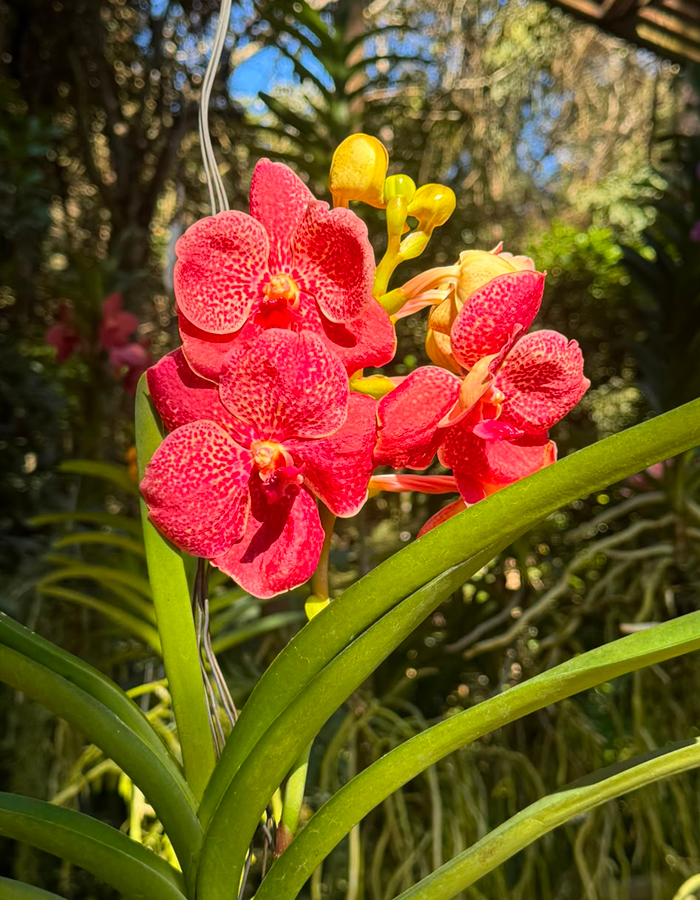
Orchids belong to the Orchidaceae family, one of the largest and most diverse families of flowering plants. Their diversity shows in their shapes, colors, sizes, pollination strategies, and scents. Some species have fragrances reminiscent of coffee, chocolate, or other substances, while vanilla is produced by species of the genus Vanilla, which also belongs to the orchid family.
Some 10,000 plants make up the Usina de Arte orchid collection. Among them are Cattleya orchids native to the Agreste region of Pernambuco, Vanda orchids, known for their aerial roots, and small species of the genus Phymatidium, with delicate, usually whitish flowers, which grow on the surrounding pitanga trees. The collection also includes Cyrtopodium, a genus of native orchids that can be found in rocky environments and bears flowers in shades of yellow.
The orchid house also features other epiphytes, such as tillandsias and Spanish moss. Epiphytes are plants that use other plants, usually trees, as support without taking water or nutrients from them. This strategy allows them to occupy different spaces in the environment and broadens the diversity of growth forms in the collection.
The collection does not stand still. Orchids have their own growth and flowering cycles, and each species responds in its own way to light, humidity, temperature, and water availability. At the Usina, these dynamics also shape the visitor experience. The maintenance greenhouse houses the plants that are out of bloom. As they develop their flowers, some are moved to the visitors' orchid house. The space thus changes continuously, following the plants' natural cycles.
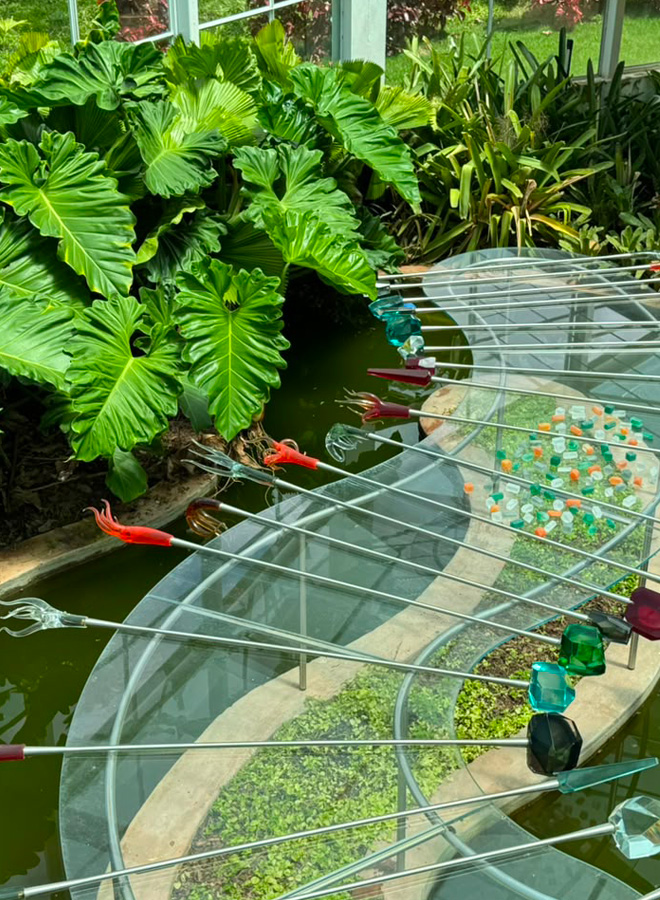
It was the wish to bring the public closer to this collection that inspired Cuban artist Carlos Garaicoa to create Jardim Frágil (Fragile Garden). Since the working orchid house was not open to visitors, Garaicoa imagined a work surrounded by orchids in bloom. To bring the public closer to the collection while also sheltering the sculpture, he invited architect Jetter Gonzales to design the visitors' greenhouse in dialogue with him.
Between glass, architecture, and plants, art and botany share the same space. The greenhouse protects, shelters, and creates the conditions for the collection to be observed through its different cycles. And in a territory that is itself undergoing a continuous process of transformation, orchids become a particularly powerful image of renewal: plants that grow, rest, and, in their own time, bloom again.
Where paths begin

Sowing new futures
Time to discover